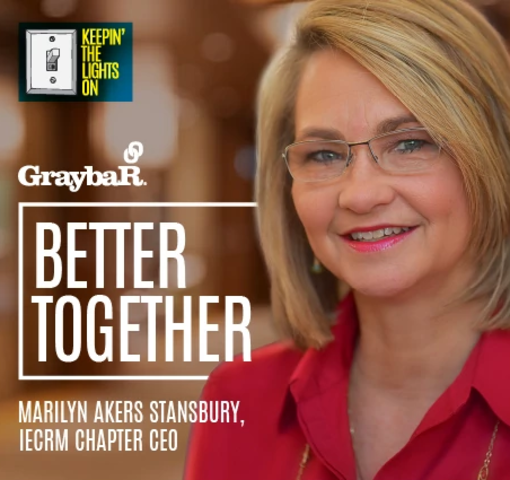
podcast-empowering-contractors-iec-chapter-ceo-marilyn-akers-stansbury
Keepin’ The Lights On

Empowering Contractors: IEC Chapter CEO Marilyn Akers Stansbury

Guest: Marilyn Akers Stansbury
Released: June 24, 2025
listen on apple
listen on spotify
listen on audible
listen on youtube

Show Notes

In this conversation, Marilyn Akers Stansbury, CEO of the IEC Rocky Mountain Chapter, discusses her journey and the vital role of the Independent Electrical Contractors (IEC) in supporting electrical contractors. The conversation covers key themes such as safety in the electrical industry, workforce development through apprenticeship programs, the challenges faced by electrical contractors in running their businesses, and the importance of creating a positive company culture. Marilyn emphasizes the need for mental health awareness as part of safety and highlights the growth of apprenticeship programs in response to workforce shortages.

Thank you for listening and please take a moment to subscribe, rate, and review our show on your favorite app.

To get a hold of us here at Keepin’ The Lights On, please email: podcast@graybar.com

Reach Marilyn on LinkedIn

Learn more about IEC Rocky Mountain

The Kitchen, Boulder

Rockie Dog at Colorado Rockies Stadium

Call or Text 988 Lifeline

Unedited Transcript

Todd (00:04)

Hey, in my life here at Graybar, I've had the ⁓ opportunity, fortunately, to work with at least three great organizations that support electrical and communications contractors, that's ABC, IEC, and NECA. I'm usually involved with these ⁓ organizations at a national level, like going to their national convention and talking with their national office people, since that's where I work at Graybar at the national level. I work with my cohorts at those levels.

Just like here at Graybar, the day-to-day work of fulfilling the mission and each respective organization's happens at the local level. ⁓ So that said, I wanted to take an opportunity to speak to a local chapter leader.

And the first person that came to mind was Marilyn Aker Stansberry, Chief Executive Officer of the IEC Rocky Mountain Chapter. She's always impressed me with her thoughtful approach to serving the greater industry as well as her local ⁓ region for workforce development.

improving the electrical and communications industry in her area. And so I spend a little bit of time really diving in and finding out from Marilyn the biggest concerns facing her respective contractors and just a few of the ways the local chapter supports construction in her part of the country. I could have spoken to her for hours because she gives me a lot of energy and as evidence also when I stopped recording we kept talking for a long time.

She's great and I'm excited to have her on here and finally get a chance to get her on here. But you know what, let's get to learn about Maryland. So let me, let me.

Marilyn (01:42)

I would say that Marilyn Acre Stansberry is somebody that is driven to make an impact. ⁓ I've had an opportunity throughout my career to work in the nonprofit, the private sector, the public sector, and even run my own business. And everything that I've ever done has been about moving an idea to implementation, to the point of sustainability where it truly is having an impact. ⁓ That's one of the things that personally I love what I do right now because we're constantly making impact across the industry. ⁓ But I would say that that's

That's a big who I am is just about what can I do to make sure that I'm having an impact.

Todd (02:18)

you

like to start each episode ⁓ with the meals that bring us together. We're talking about some new things to me as we're getting to know each other. The best place to do that is over a meal. So, Marilyn, if I were to visit you out in your part of the country, where might you ⁓ take me and the listeners and why would you choose this place?

Marilyn (02:42)

Well, if the Colorado Rockies were having any kind of season at all, I'd take us to a baseball game and we'd have a hot dog ⁓ with whatever your choice of toppings would be. ⁓ The Rockies are not having the best season. They're going through a little bit of a change. ⁓ So instead, I think right now I would take you to a restaurant in Boulder, Colorado called The Kitchen. It is a farm to table restaurant. ⁓

that's ⁓ been around for a number of years now and has even spawned some other locations. ⁓ But it's my favorite place for just getting together for fellowship and friendship.

Todd (03:20)

at the kitchen, ⁓ what would you suggest to getting there? And a follow-up question, are you the kind of person that gets the same thing every time you go, or are you adventuresome and try everything on the menu?

Marilyn (03:32)

it's such a great conversation to talk about food. ⁓ So ⁓ if we were to go to the kitchen, ⁓ we would have for sure on the appetizers, we would have crab fried rice. It is so incredibly amazing and unusual. ⁓ So I do always get that. But the great thing about the kitchen, it's a farm to table restaurant, locally sourced ingredients, locally sourced, except for fish, except for the seafood, it's all locally sourced.

So you don't know what the menu is going to be when you go. And that's one of the things that I think is so wonderful about that restaurant. I should also say that they have an amazing cocktail menu and bar. So we probably would start engaging with one of their amazing bartenders just for a little conversation there before we set down at our table. But the crab fried rice and then the great thing is it's always something seasonal. It's always something different.

And we'd share whatever we got. We'd all pass it around family style, even though it isn't really a family style restaurant. ⁓ We'd be sharing entrees and sides for sure.

Todd (04:42)

Can you share with the audience kind of high level, like what IEC is, who it's for, kind from the national perspective?

Marilyn (04:51)

Independent Electrical Contractors is a trade association for independent merit shop based electrical contractors. It started more than 60 years ago. I think we're maybe close to the 65 year mark ⁓ and really came together for a group of small contractors that wanted to train the next generation electrician rather than each individual company ⁓ having their own apprenticeship program and doing that training. They wanted they wanted consistency. They wanted quality.

They wanted to bring people together in a way that they could really serve, you know, the training. ⁓ Again, way back 60 years ago, the trade association services have evolved over the years so that there's a number of things that members join, not just to be, not just to train apprentices, although that is a big draw, but it really is about elevating and lifting up the entire industry so that as the evolution of the industry has happened, as innovations have occurred,

as companies go from being that small contractor to being a large contractor, ⁓ that those kinds of programs and services are available. ⁓ Specifically at the national level, ⁓ they focus very heavily on workforce development, creating awareness about this industry to draw people in, providing advocacy for all the things that need to happen so that we can grow our businesses, so that we can invest in education and training, ⁓ and support the needs of the industry.

And then of course the education and training itself.

Todd (06:24)

Do you know up top of your head how many contractors belong and how many chapters there are?

Marilyn (06:29)

There are about 4,200 ⁓ members of IEC from a national level ⁓ and about 18,000 apprentices at the national level. ⁓ okay. Yeah, and continuing to grow. think that, I think the apprentice population has grown ⁓ pretty close to 20 % year over year over the last few years. ⁓

Todd (06:39)

Sheesh, wow.

What is the role of the IEC chapter?

Marilyn (06:55)

So there are 54 chapters across the IEC network. Some of them are very small and small markets. Some of them are large, depending on ⁓ the market that they're serving. And what National does, I didn't really say this before in my description, but what National really does, they develop this curriculum at a national level based on the needs and national electrical codes and standards.

growth that's happening in the industry and they license that curriculum to these local chapters to offer through apprenticeship programs at the local level. So that's a big primary service that IEC National provides to local. ⁓ And then I mentioned the advocacy, but that advocacy also goes all the way down to the state level, to the local level, to the county level, based on what inspectors may be doing, based on what the code or markets may be happening within states.

So national really is that providing that consistency and communication and advocacy across. But then it's really up to the local chapters, those 54 chapters ⁓ to execute, to be the implementers of what happens. And we talk about independent electrical contractors being merit shop independent contractors, but those 54 chapters are independent in the way that they operate as well. They are all nonprofit organizations, 501C3 or 501C6.

organizations or both, ⁓ that are focused on, they're sort of like the Chamber of Commerce for residential, commercial, industrial, solar, EV, system automation, you name it, if it's electrical, that's what these chapters are supporting in their markets across the country. There's not a local chapter in every state. There are a few, what we call open territories that don't have representation of a local chapter. And then there are some chapters that have multiple chapters in their state, depending on.

depending on their size and again, the nuances of that local market.

Todd (08:51)

What area do you cover?

Marilyn (08:53)

So IEC

Rocky Mountain covers most of Colorado and all of Wyoming. In Colorado, we have all of the front range from ⁓ sort of Denver Metro North, Northeast, ⁓ over in Grand Junction and coverage in the southwest part of the state. We have two other chapters that serve Colorado, one in the mountain communities around Glenwood Springs and another chapter that serves the Colorado Springs and Pueblo Market. ⁓ And then we work collaboratively together.

on those policy and advocacy issues. We have a government relations committee that is very active. ⁓ Among our 300 plus ⁓ electrical contractor and industry partner members, about 45 of those individuals from those companies ⁓ serve on a government relations committee. And so we're following advocacy and following issues, not just with what's happening in the legislature, but before regulatory agencies and in the regulatory environment with the Public Utilities Commission where they have oversight.

over aspects of the industry. So we really work collectively and we need that voice of our electrical contractors. I'm one person that can represent on behalf of the industry, but we really need those contractors engaged. ⁓ They're the ones that are out there in the front lines. They're the ones that are in the field. They know what the challenges are. ⁓ And we can collect, we can be that collective voice, but oftentimes when we're testifying before the state legislature, for example, we will bring in our individual contractors to

to speak specifically on the experience that they're having ⁓ in the industry.

Todd (10:26)

So there are many challenges facing electrical contractors. mean, we could literally spend hours talking about all the ones that are out there. But I think from our pre-call and things, so I kind of thought, let's narrow it down to three topics that I think really stand out to me and that I hear from a lot of people. ⁓ Safety. Second would be training and education. And the third, running a business. ⁓

running a successful business. So we're going to spend a little bit time on each of those three. And so let's start with safety. And so what are your contractors' biggest concern in the areas of ⁓ safety of both their personnel and public safety?

Marilyn (11:04)

So I'm glad we're actually starting with safety because that's the most important thing that happens. ⁓

that companies need to make safety number one as their priority. doing those talks in the morning, doing those things that are gonna create that muscle memory, constantly reminding us of safe practices that we need to adhere to on job sites in the workplace. Should a situation arise, we go right back to, yes, I was trained on that. it's first aid, whether it's through OSHA 10 or OSHA 30, whether even...

you know, even CPR, that's ⁓ all those things that we do from a safety standpoint. But, ⁓ you know, and then of course the more serious things about trips and falls and other things that you would need to ladder safety and things that you would need to focus on specific to the industry. And what we do ⁓ as ⁓ IEC, as an association, both locally and nationally, is provide forums around safety. We have education and training ⁓ that we provide.

in in-person classes, in online classes, through our website, you know, the toolbox talks and whatever other people might be calling the, you know, the safety updates that we do. But we have a very robust ⁓ safety committee, safety topics that we do on a monthly basis for us. But then we put that sort of in a catalog of being able to offer it. One of the things that we do as the association, if I hear a topic mentioned two or three times,

then I know it's something that we need to focus on as a service, as a program, or as educational content for our members. Because if I've had two or three people mention it to me, there are two or three people that haven't mentioned it to me, and there were two or three people that don't even know that it's an issue. ⁓ And because so many of our contractors ⁓ are small business owners, I will say in the one to 25 ⁓ employees, they start off being electricians.

and they end up being business owners. And there's all kinds of things that they need to do, again, focusing around safety. So you can be that business owner that knows everything you need to know about safety. But as your company grows, making sure that you're creating a safety culture and a safe workplace and that it isn't just about that thing that you're training people on, but it's about that thing that you can do that instills in people so that they're constantly thinking about safety. Again, it's muscle memory.

⁓ and that we're all holding each other accountable for those safe work practices. Something else that I would say about safety, and I know that you've done a podcast on this topic, ⁓ is the importance of mental health ⁓ as a safety issue. ⁓ We're seeing more and more of that. ⁓ You know, the suicide rate in the construction industry is higher than it is in any other industry. And I just think it's really important that we focus on those mental health resources and see those as much of a safety issue.

as we do ⁓ the right way to climb and unclimb from a ladder. We had our board president talk about it at our State of the State of the Industry dinner ⁓ last fall. ⁓ Again, it is important ⁓ to talk, to understand it, to be able to be a resource if someone needs a resource. ⁓ The 988 suicide prevention line ⁓ number.

is something that we have incorporated into our apprentice handbook. We have it on digital slides here in the building. We support an annual cornhole tournament through a group of industry associations in the construction trade. ⁓ the funding from that helps to create additional education and training so that we don't say that someone committed suicide. We say they died by suicide.

There are ways in which we can ⁓ change the language that we use, but change the awareness that we use ⁓ and understand that it's, as people say, it's okay to not be okay. We just need people to know it's okay to also talk about it.

Todd (15:13)

and how

Marilyn (15:14)

And I didn't mean to turn serious on on the safety question, but I do think it's an important topic along with everything else ⁓ That is important ⁓ for people to do a safety assessment That is one thing that we offer as a service We have a safety assessment that ⁓ is not intended to ding anybody It really is an opportunity to give people an open-minded way to think about what am I doing? ⁓ For safe practices in the workplace. Do I have the tools in place that I need?

Do I have the policies and procedures in place that I need in order to maintain a safe workplace? And we give recognition to those that have completed that safety assessment. Again, we're not dinging anybody. We're encouraging everybody to on an annual basis evaluate what are you doing from a safety standpoint? And then of course there are national recognition and national awards for those that have those safe practices in place.

Todd (16:11)

Maryland, is there a particular, you know, because you're focused in your region, is there a particular safety issue that you feel like you're hearing a lot? Kind of maybe that's location specific or?

Marilyn (16:23)

So in our particular market, ⁓ I kind of think it's two extremes. Driver safety is really important. Distracted drivers, ⁓ that's something that we know from our insurance partners. ⁓ That distracted driving, whether it's the individual or whether it's the other person on the road that causes the accident, but our contractors are still involved in the scenario. ⁓ Winter driving, very important.

⁓ So I would say driving as a category is a very important topic. And then because we do have extremes, the highs and lows of temperatures, ⁓ you know, then in the summer, it's really about staying hydrated and making sure that we're doing all the right things that employees need ⁓ in order to, you know, to be refreshed ⁓ and stay hydrated when it, you know, when temperatures can reach 100 degrees in the summertime pretty quickly in the heat. And remember,

In Colorado, we're closer to the sun. So, you know, those protections about sunscreen and wearing the right PPE in both a winter and a summer environment, really important.

Todd (17:29)

What is the state of your area regionally, your workforce needs in the pipeline?

Marilyn (17:36)

So workforce development is a big focus area. As I mentioned, ⁓ is the reason ⁓ providing that apprenticeship program is sort of the base foundation of how this association originally started. ⁓ having those apprenticeship programs, they are registered apprenticeship programs. The local chapters serve as the sponsor ⁓ of those programs. And again, if you're a large contractor, you can be a sponsored apprenticeship program kind of independently on your own.

⁓ though we want them to be part of IEC as well. But it's really an opportunity for those smaller contractors to participate in registered apprenticeship programs. IEC Rocky Mountain ⁓ in this year has ⁓ just over 2,800 apprentices enrolled in our program. We are the largest apprenticeship program among the IEC network, and we continue to see an increase year over year over year, and for a lot of reasons that I can speak to.

⁓ But even if I doubled the size of the program, we would not meet the need that we have because of the shortage of skilled trades. And ⁓ we talked about baristas a little bit earlier in coffee shops. ⁓ know, that training program to get somebody skilled at making a fancy ⁓ delicious cup of coffee happens in a much shorter time than the four years at minimum that it takes for

an apprentice to get licensed as an electrician. It is a huge investment in the 8,000 hours that they have to do on the job. In Colorado, somewhere between 288 and 576 hours of classroom time while they're working a full-time job. That's really what it takes to be that licensed next generation electrician. ⁓ So our apprenticeship program, our workforce development efforts really are about bringing individuals into the industry.

In the 10 years that I've been in this role, I have seen ⁓ kind of the average age of the individuals that walk into this building. I've seen them get younger and younger because we are seeing more individuals coming right out of high school. We're doing more in high schools so that young people are getting experience and exposure through pre-apprenticeship programs. They're getting hired right out of college through some of our career fairs and partnerships that we're doing with high schools and other

nonprofit community organizations that are focused on workforce development. And again, I just love that the pendulum has swung to this place in education where it's okay to pursue an apprenticeship. It's okay to pursue a community college or technical degree, and it's also okay to pursue a college degree depending on what you as an individual want to do to pursue. ⁓ We've also been able to develop partnerships and relationships with higher education institutions

so that when an individual completes their 576 hour apprenticeship program, their 8,000 hours of on the job training, they're able ⁓ to use, they're able to obtain almost half of a bachelor's degree if they choose later on that they do want to go get a degree in construction management or organizational development as they've moved on. That investment that they've made in their apprenticeship is still going to pay off.

into advancing their higher education as opposed to having to go back and take classes from the beginning. The same is true for our partnerships with community colleges where you can get an associate's degree with just about 15 more college credit hours beyond what you can get from the apprenticeship. and then again in 2026 we're going to be able to offer students that are coming out of high school ⁓ an opportunity to go straight into the second

semester of the first year of their apprenticeship because of the high school credits that they've received from ⁓ a program called HBI, the Home Builders Institute created a program for high schools that has been adopted in about 80 high schools in Colorado now. And we're beginning to partner with those schools that are graduating, those students that have gone through four years in high school of being exposed to the construction trade and have chosen to do electrical.

We have partnered with SkillsUSA. We sponsor the electrical program within the SkillsUSA at the state level, but IEC National is also a supporter of SkillsUSA at the national level. ⁓ And so it's another way for us to communicate about who we are and what we do and why we do it. And at the local level, we've been offering scholarships to help support the national travel when someone wins locally to be able to go and compete ⁓ at the national level.

It's one of the things that we provide packages to them, tools and other giveaways, but we've also begun giving them a little bit of a scholarship to help support their competition at the national level.

Todd (22:30)

Well, mean, these first two things, safety and training and education, you know, are just two of many things that an intellectual contractor, business owner, manager, executive is dealing with. ⁓ So let's talk about how maybe in list form, your top whatever, two or three concerns that come up the most from your contractor members about running their business broadly.

Marilyn (22:56)

So our electrical contractors, for the most part, they went through an apprenticeship program. If they were lucky in the state they were in to get their training to go through an apprenticeship program ⁓ and get licensed as an electrician. They may never have imagined that they were going to eventually be a business owner. Once they become business owners, there's all kinds of ⁓ additional things they need to learn about payroll and labor and employment topics ⁓ and accounting and bookkeeping.

and legal issues. And so those are all things that as a local chapter, we're able to provide in education and training and additional professional development beyond the technical piece of being an electrician. Some recent examples that I can provide ⁓ is under the new Secure Savings Act, Secure Act, ⁓ just investing in retirement plans. Help for you as an individual.

but also for your employees. So how can we get contractors to that point of creating a 401k plan or providing for succession planning? That's a huge thing that happens is that they become a business owner along the way. They have a family, their families may or may not want to be in the business and regardless of whether they do or they don't, there needs to be a succession plan or we have brothers that form a company and if something happens to one of them, what happens in the succession plan?

So a lot of education and training around the options that you have for turning your company over to your employees, becoming an employee-owned company, selling the company if that's what you so choose to do. Those are all kinds of things that we see come up. Another one that we see come up is just around bonding. We have companies grow to the point that ⁓ they're asked to provide a bond on a project ⁓ and they might not have their financial documentation.

⁓ ready to be able to get a bond on that job and we don't want them to miss out on opportunity. So educating and training around bonding and as markets change, as we see financial ⁓ interest rates change and flow, about every two or three years I see bonding come up as an issue and we just recently provided a session on that. ⁓ Again, if you're a contractor that's doing public sector prevailing wage work, ⁓ how you

how you manage and keep compliant with that record keeping, that's another big draw for why an independent electrical contractor would want to be a part of the IEC Association is because we help provide the education and the resources and the tools to be able to help you with the compliance requirements that you have when you do start doing that public sector work. ⁓ Labor and employment issues, ⁓ family and medical leave. ⁓

payroll requirements ⁓ and depending on the state that you're in, those things have begun to change more and more and more over the years. so ⁓ helping them provide that. And then I mentioned the other finance and accounting just in bookkeeping. Like how do I move from this spreadsheet or this notepad I was using to bill everybody, how do I move from that into a more sophisticated system that helps me?

streamline my business so that can go back and do the work that I originally set out to do and that's being an electrician on a job site. ⁓ So we want to support all of that business infrastructure ⁓ and provide the professional development that contractors need in order to grow in their companies.

Todd (26:30)

What are you seeing as far as creating a good culture within a business?

Marilyn (26:35)

So I think ⁓ maybe beyond safety, ⁓ I think culture is another number one priority for a business. Really establishing a company's mission, a company's values. ⁓ You can train for these technical skills, but really establishing a culture and having the right people in the organization that can help you grow. This is actually a national initiative right now ⁓ for IEC at the national level.

is to really uphold those values and ensure that we are creating a legacy and a culture, not only for the national organization, but for our local chapter, for our local chapters. I can tell you that from our own local chapter perspective, we base everything on those core values of respect and integrity and collaboration.

⁓ you know, even when I'm working on something with an employee, I'll take an issue back to how it impacts the values, how it impacts the culture of our organization and creating that important culture. We didn't really talk about this, ⁓ but in bringing people into the industry, the workforce development ⁓ outreach that we work on, I want everybody to know that being an electrician is a lifelong learning, sustainable living wage occupation.

regardless of who you are, regardless of your background, regardless of your ethnicity, regardless of your gender, there is an opportunity for everyone to be in this industry. And that's another area where we've seen significant growth is bringing women into the industry. I just was at an industry event Friday night and I had a young woman come up to me and say, Marilyn, but do you remember me? I'm an alumni. I graduated four years ago and I wanted you to know that I'm an estimator now.

And ⁓ so there's this pride that ⁓ comes from this culture that we've created about how important these jobs are. And ⁓ again, the impact that these jobs make on our communities and on the lives of our families. And that all kind of comes back to culture.

Todd (28:52)

Well, speaking of culture and kind of mission values and all that, I like to close our conversations out by refocusing on the why of what we do. So, Marilyn, what motivates you day in and day out, and what keeps you excited and passionate about what you do?

Marilyn (29:08)

So ⁓ if it wasn't obvious, I love what I do. ⁓ And part of the reason that I love what I do is because I love for our contractors to tell me the projects they've been working on. They will say, you know, that was my project, that stadium, that hospital, that school, that community, that was my project. And so it keeps me inspired by what our contractors are doing. ⁓ Stories like an alumni coming up and saying, hey, remember me?

This is what I did and now I'm running a residential service van for this company. ⁓ You know, I found my niche within the industry and there's so many opportunities within the industry. ⁓ I tell everybody, I just celebrated my 10th year with the organization and there are some days that I walk in and I feel like it's the first day on the job. There's so much still to build. I love building things. There's so much still to do.

⁓ And so, you know that that inspires me that that that That engages me to continue to be able to build things and at the same time I had a huge career before I even took this position But then there are days that I walk in and I feel like this is all I've ever done ⁓ Because it is such just such a great environment ⁓ to be in so Yeah, so I'm hoping to to keep doing it

Todd (30:29)

Well, great. Maryland, I'm so happy that we were able to make this happen and connect. And thank you so much for taking time for being on Keeping the Lights On. And I look forward to talking to you in the future.

Marilyn (30:39)

Sounds great. Thank you, Todd.

Todd (30:43)

Hey, that was my conversation with Marilyn Akers-Stansberry, CEO of the IEC Rocky Mountain Chapter. You can connect with Marilyn and find out what she and her team there are working on by heading to the links in the show notes. Hey, I would love to hear how you're involved with your local chapter. It doesn't have to be IEC or ABC or NECA. It can be any association where you're involved locally and what you're doing and how it's helped your business. Go ahead and shoot me a...

comment in the YouTube video or Spotify if you're using those platforms or send me an email at podcast at graybar.com. Hey, if you've enjoyed this episode, you can help us grow, teach the algorithms, all our AI robot overlords by subscribing, subscribing, you know, giving it a thumbs up, voting it positive, giving it five stars, whatever the program needs you to do, but it really helps. ⁓

helps us with the algorithm so other people can find it and learn about all the great topics and guests that I have on here. Thanks for listening to this episode of Keeping the Lights On. We'll see you next time.

What advice would you give to ⁓ 18-year-old Marilyn?

Marilyn (31:57)

well, the advice I would give ⁓ to an 18-year-old Marilyn ⁓ might be at the age of 18 not to have taken everything so incredibly seriously. ⁓ I was a pretty serious 18-year-old, very focused and driven, ⁓ much like I am now. And even sometimes now, I have to remind myself to ⁓ not take myself so seriously that we can stop and have fun along the way. I think at the age of 18, I would have also encouraged myself to just... ⁓

let go a little bit more than you might have done at an early age.