podcast-construction-communication-challenges-with-amanda-king
Keepin’ The Lights On

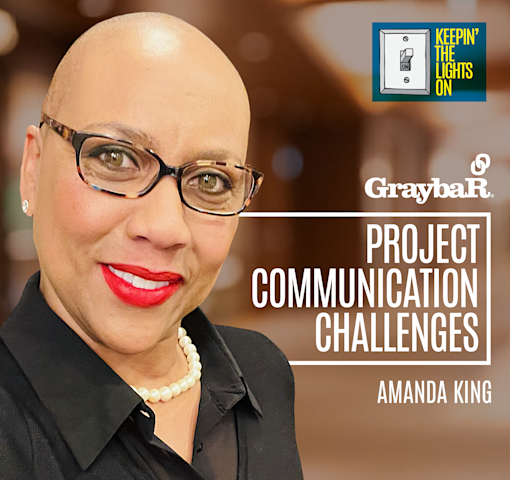
Construction Communication Challenges with Amanda King

Guest: Amanda King
Released: March 25, 2025
listen on apple
listen on spotify
listen on audible
listen on youtube

Show Notes

Have you seen projects/tasks delayed because of communication problems? Have you taken time to do a post project debrief to understand the causes of these communication gaps? During last year’s NECA convention, I sat down with Amanda King to talk over her thoughts on the best ways to improve communication between the field and the office at an electrical contractor.

Amanda King is a leadership coach and trainer for the electrical industry. In 2016, she began developing leadership training programs for NECA contractors. Amanda has a marked skill for connecting, engaging and inspiring her audiences. As the owner of Wired Leadership, Amanda works exclusively with NECA contractors and their IBEW partners to increase productivity and profitability, through training, coaching and development.

Welcome to Keepin’ The Lights On! I’m your host Todd Reed, and on this podcast I connect with the owners and pros who design, build, and maintain our electrical, communications, and industrial world to explore the best ways forward.

Thank you for listening and please take a moment to subscribe, rate, and review our show on your favorite app.

To get a hold of us here at Keepin’ The Lights On, please email: podcast@graybar.com

Reach Amanda King on LinkedIn
Learn more about Wired Leadership

Pietro’s Lodi, CA

Unedited Transcript

Transcript

00:00:06 Todd

Hey, have you have you seen projects or tasks in your company delayed because of communication problems?

00:00:13 Todd

You probably have. I certainly have.

00:00:16 Todd

But have you taken the time to do like a post project debrief to understand the causes of these communication gaps?

00:00:22 Todd

I I struggle with that a little bit and so during this last year's.

00:00:27 Todd

Nikka Convention I sat down with Amanda King to talk over her thoughts on the best ways to improve communication between the field and the office at electoral contractor. Amanda is a leadership coach and trainer for the electrical industry.

00:00:27

Dimension.

00:00:43 Todd

In 2016, she began developing leadership training programs for Nika contractors.

00:00:47 Todd

Amanda has a marked skill for connecting, engaging, and inspiring her audiences. As the owner of Wired leadership, Amanda works exclusively with Nika contractors.

00:00:58 Todd

Ibew partners to increase productivity and profitability through training, coaching and development.

00:01:05 Todd

Welcome to keeping the lights on.

00:01:06 Todd

I'm your host, Todd Reed, and on this show I connect with the owners and pros who design, build and maintain our electrical, communications and industrial world as we explore the best ways forward.

00:01:18 Todd

Hey I have a quick ask for.

00:01:20 Todd

Can you take a moment to help our show grow by subscribing or following the show on your favor?

00:01:26 Todd

Cast player or and YouTube and maybe even taking a chance that couple minutes to give a five star rating and reviewing it on that favorite platform as well. That'd be awesome.

00:01:35

Alright, thank you for that.

00:01:37 Todd

Let's get into the show.

00:01:39 Todd

Well, so Amanda, you know, we like to start out each episode with the meals that bring us together. 'cause, right?

00:01:45 Todd

You come to know people that you don't know and the meals breaking bread.

00:01:48 Todd

It were.

00:01:49 Todd

So if I or one of the listeners were to visit you in your hometown, where might you take us and why would you choose this place?

00:01:55 Amanda

Wow, I would definitely take you to pietros.

00:01:58 Amanda

It's an Italian restaurant in Lodi, CA, and my goodness, the food, the ambience, it's just amazing.

00:02:06 Todd

Oh wow. Awesome.

00:02:08 Todd

What do you like to get there?

00:02:10 Amanda

I usually start out with the meatballs.

00:02:13 Amanda

That's one of their greatest appetizers. I also like their chicken piccata.

00:02:18 Amanda

That's a.

00:02:19 Amanda

But you you can't get a bad meal there pietros in Lodi.

00:02:22 Todd

You also get a dessert or you.

00:02:24 Amanda

No, I don't usually order desserts.

00:02:27 Todd

Load up on the main course.

00:02:28 Amanda

And you're. Yeah, but they have everything.

00:02:30 Amanda

Have.

00:02:30 Amanda

They have salads.

00:02:32 Amanda

All sorts of great pasta dishes are known for their lasagna, too.

00:02:35 Todd

Yeah, the all right.

00:02:37 Todd

I got it.

00:02:39 Todd

Lido.

00:02:39 Todd

Is that what you said?

00:02:40 Amanda

Lodi.

00:02:42 Amanda

Lodi, CA. Cool. Let's do it.

00:02:44 Todd

Vitrose. So you know, Speaking of food, I've been.

00:02:48 Todd

The bear lately?

00:02:49 Todd

Catching.

00:02:49 Todd

It's a, you know, a show on one of the streaming networks, right about cooking and about a chef who owns a restaurant and it's.

00:02:57 Todd

It's fictional, but it's chaotic and but I think it illustrates the importance of clear intent and communications, which they don't always exhibit very well on that show which.

00:03:06 Todd

Drama. Yeah. And thinking about that show and talking to you. And I thought, you know.

00:03:11 Todd

No different.

00:03:12 Todd

It's kind of a chaotic business, right?

00:03:13 Amanda

Like oh.

00:03:13 Todd

Yeah, like a restaurant.

00:03:14 Amanda

Definitely.

00:03:16 Todd

So, and we're clear communication and the strategy among all the players because construction is not just the electoral contractor. As everyone knows, it's listening to this.

00:03:24 Todd

All the trades, the GC, the owner and all that.

00:03:27 Todd

So you know.

00:03:29 Todd

What is the state of communications between the electoral contractor office and the electrical contractor field team?

00:03:36 Amanda

15 I would say that it varies by contractor for sure. I mean I I don't make a blanket statement.

00:03:44 Amanda

However, I think it needs work.

00:03:46 Amanda

Generally speaking, it needs improvement, and even though we've got access to more technology.

00:03:53 Amanda

That tells us.

00:03:54 Amanda

It's going to make your life easier. You're going to be more efficient.

00:03:57 Amanda

It's going to help communication. I really do believe that sometimes technology is contributing to that gap because of the separation of the human.

00:04:07 Amanda

So you're dependent upon that form. Did you fill out that form?

00:04:10 Amanda

Did you see that e-mail as opposed to those face to face interactions that capture so much more?

00:04:16 Todd

Right.

00:04:17 Todd

So yeah, yeah, you.

00:04:18 Todd

I mean, that's what all much of this technology is all about.

00:04:20 Todd

Oh, you'll be better as a team.

00:04:22 Todd

Sometimes, you know, maybe not.

00:04:24 Amanda

Yeah. So there's work to be done, yeah.

00:04:26 Todd

So what are some of the biggest impacts you're seeing that can be attributed to this communication gap between the office and the field?

00:04:33

Well, I feel.

00:04:34 Amanda

Like when you've got people working on the same project. Sometimes it creates this false sense of harmony.

00:04:40 Amanda

It's like there's conflict there issues, but a lot goes unsaid and the blame game comes into play.

00:04:49 Amanda

Frustrations and it just yields a loss of productivity on both sides.

00:04:55 Amanda

When?

00:04:55 Amanda

When there's that struggle around communication, and I do believe everybody wants to do a good job, but we're just not setting people up for success because the system and the communication flow just isn't there.

00:05:09 Todd

So I mean construction.

00:05:11 Todd

I don't know how long electrical contracting has been the thing.

00:05:14 Todd

150 plus years, right?

00:05:16 Amanda

Yeah, a long time.

00:05:16 Todd

Do you think we'd have it figured out?

00:05:18 Todd

Oh no. So So what?

00:05:20 Todd

What are some of the other reasons?

00:05:21 Todd

Why the gaps exist?

00:05:22 Todd

Mentioned technology.

00:05:23 Todd

That's, but that's just.

00:05:26 Todd

Fairly relatively a new.

00:05:27 Todd

So yeah.

00:05:28 Amanda

So when I think about.

00:05:30 Amanda

The.

00:05:30 Amanda

These gaps.

00:05:32 Amanda

I think it ties into a lack of clarity around roles and responsibilities.

00:05:38 Amanda

And a lack of a system in place and and oftentimes a foreman can have one person as a project manager, and these are the rules that this is your role. And then you get another project manager and they pm the job in a different way. So it's this.

00:05:54 Amanda

Learning curve and hey, what am I going to be responsible for now?

00:05:58 Amanda

And I just think that just it's it doesn't help you know with that trust and it's just a lack of consistency with policies and procedures that really contribute to that gap.

00:06:09 Todd

Yeah. So you're talking about even within the same contractor, not not just going contractor to contractor you're talking about within one contractor, you.

00:06:15 Amanda

Hot so you can imagine if we work for the same company and I've even seen it on the same project. You got a PM and a foreman in the same trailer.

00:06:16 Todd

Have gaps.

00:06:26 Amanda

And there's a breakdown of communication, and they're in the same trailer because there's so many things at play that separates us, and we have to be more intentional about it.

00:06:36 Amanda

If we can struggle within an organization absolutely across trades.

00:06:41 Todd

Well, yeah. I mean that's.

00:06:43 Todd

Yeah. You talked about the electronic being a divide, but you're sitting right next to each and there's a problem.

00:06:49 Amanda

Yeah, and sometimes it's.

00:06:49 Todd

That's nothing.

00:06:50 Amanda

You know when there's conflict, it's never, never.

00:06:53 Amanda

Yeah. And then it's.

00:06:54 Amanda

I don't want to talk about.

00:06:56 Amanda

And then then there becomes this sense of avoidance or withholding information. And it's really a slippery slope, right?

00:07:04 Todd

Well, you know who likes conflict?

00:07:06 Todd

Most of us are like if I can get around it.

00:07:09 Todd

Yeah, I don't want to confront you about whatever it is that's bothering me.

00:07:13

So or.

00:07:14 Todd

Away again, we've been around a long time.

00:07:16 Todd

There's, you know, I think they know about a gap.

00:07:18 Todd

Think that's probably a known.

00:07:20 Todd

Maybe they don't how to define it.

00:07:22 Todd

What's what do you think's been holding the industry back from bridging that gap, I mean?

00:07:28 Amanda

Yeah, I think.

00:07:29 Amanda

Company leaders spend so much time working in the business as opposed to working on the business.

00:07:36 Todd

Oh yeah.

00:07:37 Amanda

I think a lot of leaders are spread so thin they're bidding.

00:07:41 Amanda

They're winning jobs and then they've got to get someone to run the jobs and.

00:07:46 Amanda

They're constantly chasing the next project that they're not taking the time to even evaluate what just went wrong here.

00:07:54 Amanda

We're just on to the next, so I definitely think it has to do.

00:07:57 Amanda

Who would not having the time or not placing the time to work on the business?

00:08:02 Amanda

I also think.

00:08:05 Amanda

It happens similarly with training field leaders because many of our foreman leaders in the field, they get placed in that position of of leadership and they don't get any training to go with it ahead of time. And it's kind of the sink or swim program.

00:08:20 Amanda

And it's like you're the.

00:08:22 Amanda

Good luck and and that gap it just perpetuates and that's something that's been in the industry.

00:08:23 Todd

Yeah.

00:08:28 Amanda

Industry for.

00:08:29 Amanda

It's not just in a region, it's an industry wide dilemma where these intentional decisions around training and and talking about how are we going to communicate, how are we going to do business.

00:08:42 Amanda

I just think.

00:08:42 Amanda

Got a lot of work to do there.

00:08:44 Todd

Well, I mean, you know, in our business, our main people on the front lines are our.

00:08:49 Todd

Reps or our?

00:08:50 Todd

Know customer service whereas you know there are electricians.

00:08:54 Todd

Well, we, you know, we're always trying to promote from within.

00:08:56 Todd

Sure. Like my contractors do.

00:08:58 Todd

Yeah, but you know, the thing we always talk about is just because you're a successful sales Rep, does that mean you're a successful manager necessarily and the same year, like for contractor? I mean, electrician doesn't necessarily mean a good foreman, but maybe if but some of it is.

00:09:10 Todd

A lack of training sometimes, and I think that's what I'm hearing there.

00:09:14 Amanda

Sometimes it's a lack of training and to your point it happens all the time.

00:09:18 Amanda

This person is a great worker.

00:09:20 Amanda

Show up every day.

00:09:22 Amanda

Let's promote them and without giving them the tools for their tool belt.

00:09:22 Todd

Yeah.

00:09:27 Todd

Yeah.

00:09:28 Todd

I saw an example.

00:09:30 Todd

Of somebody one time.

00:09:32 Todd

Just use kind of military formality. They were a great Sergeant, but they were promoted to a captain drool and they weren't necessarily.

00:09:40 Todd

A captain type of position. You know where you're thinking, broader strategy and stuff, but there tactician man, they're gonna get it done better than anybody. But I thought, what an interesting kind of dynamic 'cause you want to promote.

00:09:47 Amanda

Yeah.

00:09:52 Todd

But maybe that's just not the right seat for them.

00:09:54 Todd

And you can maybe find another one if if they can't, yeah.

00:09:57 Amanda

Yeah. And I think too that ties into identifying people strengths and taking the time to know, hey, what's their strong suit and put them in a position where they can succeed and giving them those, those tools that they need, you know, to get the job done.

00:10:13 Todd

So we're doing this at the Nika convention in 2024, which is cool.

00:10:18 Todd

So fun to meet you in person and kind of do these.

00:10:20 Amanda

Yes, and I faint you. Yeah.

00:10:22 Todd

And you're speaking at a couple said you had a really good session here right before they she sat down here. So she spoke and then come right here.

00:10:29 Todd

Yeah, for doing that. But I think you're talking about this subject here kind of generally, right?

00:10:30 Amanda

Yeah.

00:10:34 Todd

Communication gap and you have 10 ideas.

00:10:37 Todd

About how to start bridging that gap.

00:10:39 Todd

Unfortunately, we don't have time to go over all.

00:10:41 Todd

And you just spoke on it. So if I don't do it.

00:10:44 Todd

But I wonder if we can maybe just spend a little bit of time focusing on a few of those 10, you know, kind of picked out some of the ones that really stood out to me.

00:10:44 Amanda

And then.

00:10:52 Amanda

OK.

00:10:52 Todd

So let's start out with sops or standard operating procedures and what role do those play in improved communication.

00:11:00 Amanda

Yeah, it plays a huge role, Todd, Man.

00:11:03 Amanda

It's like when there's an absence of sops.

00:11:08 Amanda

The rules are constantly changing.

00:11:10 Amanda

Kind of like I mentioned, a moment moment.

00:11:12 Amanda

It's like.

00:11:14 Amanda

You've got this person who runs a project this way. You have this person at PMS, a project this way, and it's constantly changing.

00:11:22 Amanda

There's that learning curve because the processes are not well defined.

00:11:27 Amanda

Not in writing. A lot of times.

00:11:30 Amanda

And with 98% of Nika contractors being family owned, it's like we got some small shops that maybe they don't feel like they have the bandwidth or the capacity to focus on that.

00:11:35

Yeah.

00:11:44 Amanda

They're just trying to get the job done and they're playing the utility player, so it's really important to have procedures in place.

00:11:52 Todd

So can you like? I don't know what's an example of an SOP that you've seen work or that they would be a good one to implement?

00:12:00 Todd

Mean 'cause. They have a million procedures and a contractor. So like what are couple?

00:12:04 Todd

Of.

00:12:05 Amanda

Yeah, I think when we're talking about procedures, unfortunately.

00:12:10 Amanda

When you step into a role, these folks are not getting a manual like to do their job, just like a playbook.

00:12:16 Todd

OK.

00:12:18 Amanda

They're not given that.

00:12:19 Amanda

So anytime a company can create a foreman's manual around, let's say documentation, I mean this is the centralized location for all documentation to live, whether it's you know with and I'm not sure if I can say like names of of programs or not, but.

00:12:38 Amanda

It's like.

00:12:39 Amanda

If it's, if it's a bluebeam or pro core or SharePoint.

00:12:44 Amanda

Like having a place for all documents to live. Even the expectation around dailies. The foreman's dailies, where they're keeping a journal of the events that occur on job.

00:12:55 Amanda

Like what is that process going to look like?

00:12:56

OK.

00:12:59 Amanda

Submitting RF is you.

00:13:01 Amanda

Request for information what's what's that look like? In some cases, the field is riding the RFI and then handing it off to a project manager to Polish it up.

00:13:10 Amanda

In other cases, it's like Nope the PMS.

00:13:12 Amanda

Do all the rfis.

00:13:14 Amanda

Just saying, hey, we're going to have clarity around these procedures that have to happen.

00:13:19 Todd

Wiser hesitancy to create this.

00:13:24 Amanda

I don't know.

00:13:25 Amanda

Really. Like what? The true hesitancy is, I think it goes back to in a lot.

00:13:30 Amanda

Cases.

00:13:31 Amanda

People are working in the business and not working on the business and other in other cases.

00:13:39 Amanda

People are feeling.

00:13:40 Amanda

Hey, we've been doing it this way without.

00:13:43 Amanda

All the paperwork in it without the processes and we've been successful where we've been in business for 20 years and we've done OK without it.

00:13:43 Todd

Yet.

00:13:50 Amanda

Why now?

00:13:51 Amanda

So I do think some people are hesitant.

00:13:55 Amanda

They're hesitant to change.

00:13:57 Todd

Yeah, I mean.

00:13:58 Todd

Can putting those in add a little bit of burden or something?

00:14:01 Todd

That what people are concerned.

00:14:03 Todd

It seems like it could be a little bit like I just do it this way.

00:14:05 Amanda

Yeah. I just think there's so many pieces.

00:14:08 Amanda

The puzzle.

00:14:09 Amanda

And if you're not trained yourself, if you don't even know what's out there, you're probably going to be hesitant to implement something because it's just so daunting.

00:14:18 Amanda

But I I love it that.

00:14:20 Amanda

Nika does a great job with providing support and so many services that you could, you know.

00:14:26 Amanda

Figure out what's going to be a good fit.

00:14:29 Amanda

Our company, yeah.

00:14:30 Todd

So.

00:14:30 Todd

And you mentioned like 3 different software and there's a million different ones.

00:14:34 Todd

It's kind of like choose one.

00:14:35 Todd

Really perfect.

00:14:36 Amanda

Yeah, and do your homework, right?

00:14:38 Amanda

Your.

00:14:39 Amanda

Check it.

00:14:39 Amanda

Do your research to see does this software do what we needed to do and something else that I would just to chime in on this part around.

00:14:49 Amanda

Change some people just don't want to change, and I think our industry does a great job at placing change upon people.

00:14:58 Amanda

It's like, hey, we're going to do this and this is how this is how you're going to do it from now on. But when you're looking at a software that, let's say, the field is going to use, why not?

00:15:09 Amanda

Like get a 30 day, 60 day trial and let one of your field people try it.

00:15:13 Amanda

And report back.

00:15:14 Amanda

Like is this going to do what we needed to do so they can champion the change?

00:15:18 Amanda

As opposed to feel like they're shoving something else down my throat.

00:15:21 Todd

Yeah, right.

00:15:22 Todd

Yeah, definitely including the people using the.

00:15:24 Todd

Software's key.

00:15:25 Amanda

Yeah, 100%.

00:15:27

And.

00:15:28 Todd

So that kind of leads me to my next question a little bit talking about transparency.

00:15:31 Todd

Love reading about company culture and how to improve that and transparency comes.

00:15:35 Todd

A lot.

00:15:35 Todd

So, you know, like being transparent about, hey, we're, we're look thinking about this software instead of just like you said.

00:15:42 Todd

Amanda, we're putting the software like, wait.

00:15:44 Todd

And so step back and like you know, transparently say, hey, we're thinking about this.

00:15:45 Amanda

Yeah.

00:15:49 Todd

So let me ask you, really, I think transparency is one of your ideas, right for our thing.

00:15:54 Amanda

Mm.

00:15:54 Todd

What role does that play? You know, in this?

00:15:56 Todd

Bridging that gap.

00:15:58 Amanda

Yeah. Well, I believe that.

00:16:00 Amanda

One wants to fail.

00:16:01 Amanda

I don't.

00:16:02 Amanda

I don't think that people wake up in the morning thinking how can I screw up today?

00:16:06 Amanda

Can I get myself fired today?

00:16:09 Amanda

I really don't think people are waking up with that mindset.

00:16:12 Amanda

With transparency comes trust.

00:16:15 Amanda

And that's what we need to bridge the.

00:16:17 Amanda

We need trust, and when I'm talking about transparency, a lot of times when I hear it.

00:16:24 Amanda

From the field, it's about job budget information.

00:16:28 Amanda

It's like, are you being transparent with all the details with this job and the truth of the matter is our contractors.

00:16:36 Amanda

They want the field leaders to be intimately connected with that project more than anybody else, know it, inside and out.

00:16:43 Amanda

But they limit their access to the information and they limit their time with the.

00:16:49 Amanda

And even sometimes it's the sense of are they holding something back and, like, what's the secret?

00:16:56 Amanda

The secret about this job? Budget information.

00:16:58 Amanda

So transparency, the way I see it is you got to give that information to the field.

00:17:04 Amanda

So they can.

00:17:06 Amanda

Feel confident in the plan that they make around those budget numbers.

00:17:11 Todd

I feel like this is an obvious question, but I'll ask it anyway.

00:17:13 Todd

Anyway, why is there that hesitancy to share information?

00:17:19 Amanda

Well, I don't want to judge anybody or make a blanket statement, however.

00:17:25 Amanda

Oftentimes, some people believe that if you give the actual numbers, people will take the foot off the gas and they will milk out all the numbers.

00:17:34 Amanda

Like, oh, you've got 20,000 hours to do underground in building a.

00:17:39 Amanda

They're afraid they're going to use all those hours because there's no urgency.

00:17:45 Amanda

So I think that part of it, I think the other part is around overhead and profit that profit percentage like companies don't want the companies you know the employees to know, yeah, we're going to make X amount of dollars on this job.

00:17:58 Amanda

So they keep those numbers closer to this.

00:18:01 Todd

Yeah, that's that's a something for an owner or management to overcome for sure in their set. Yeah. Interesting.

00:18:05 Amanda

Yeah.

00:18:08 Todd

So another thing we want to talk about are job walks and site visits.

00:18:13 Todd

Now I've got to think this.

00:18:14 Todd

In fact I.

00:18:16 Todd

Semi confidently say I think it.

00:18:18 Todd

A lot.

00:18:18 Todd

I think they're out there walking job sites and all that stuff, so I was a little surprised to see this in your step. Is that well, they do. This certainly don't they?

00:18:25 Todd

There must be some perspective that you can bring in like so why'd you add that as a step as something that can be improved?

00:18:30 Todd

Can be improved but.

00:18:32 Amanda

Yeah. Well, let me tell you, it varies across the board and I've heard so many people tell me.

00:18:38 Amanda

You know what?

00:18:39 Amanda

I know my PM's busy, but I I figured he'd he'd visit the job site at some.

00:18:44 Amanda

There's some people that have been on their job site for 10 months, 14 months and they've never seen their project manager, so they're able to do so much remotely.

00:18:55 Amanda

They don't feel the.

00:18:56 Amanda

Need to walk the job so clearly a lot of job locks are happening before the job gets underway, right?

00:19:02 Amanda

Let's take a look at where we were.

00:19:03 Amanda

Yeah.

00:19:05 Amanda

Think about.

00:19:06 Amanda

So sometimes there's a job walk early on.

00:19:08 Amanda

Or if it's, you know, required with the estimate, you know estimating process of it, but.

00:19:13 Amanda

There's so many people that are just waiting to be supported by their project manager and the other part of that you know with, with not visiting the job site change orders are being priced and oftentimes not enough money.

00:19:29 Amanda

Being put on that change order because they're coming up with a price site unseat. Does that make sense?

00:19:34 Todd

Yeah, yeah. Now it does, actually.

00:19:36 Amanda

Like not walking the job, but it'll.

00:19:38 Amanda

Cost us to do.

00:19:40 Amanda

When it's the field that is on site up close and personal, and and sometimes they're not even included in the conversations around change orders.

00:19:47 Amanda

So I do believe.

00:19:48 Amanda

That you know, when those job sites have those visits and they're scheduled, that's another point, not just to do the site visits, but a scheduled site visit.

00:20:00 Amanda

That means I'm going to plan.

00:20:03 Amanda

There's going to be a plan in place, an agenda for that visit. So it's not like somebody's just popping up.

00:20:08 Amanda

Oh, show me.

00:20:09 Amanda

Show me that and oftentimes it ends up feeling like a disruption to the job site. When you got an unexpected visitor and it's like, hey, you wanted me to come by. So here I am.

00:20:20 Amanda

But now you've disrupted the flow because this person is trying to layout their employees to do their job.

00:20:26 Amanda

So with those scheduled site visits, I think it's perfect because concerns can be addressed. Adequate support can be provided.

00:20:35 Amanda

You know, figuring out what the field needs, more accurate change order pricing, like I said.

00:20:40 Amanda

Also, it helps morale.

00:20:43 Amanda

You know to to show appreciation to the crew if you're going to show up, Mr. PM, for that scheduled visit, why not bring up a few?

00:20:50 Amanda

Oh, gotcha.

00:20:51 Amanda

Right.

00:20:51 Todd

Food is always good.

00:20:52

Yes, you.

00:20:53 Amanda

Know how food lands with construction.

00:20:56 Amanda

It's a hit.

00:20:56 Todd

Yeah.

00:20:57 Todd

So what I'm hearing?

00:20:58 Todd

What's standing out to me most about?

00:21:00 Todd

And you brought this word up a couple times is intentional, intentionality. And what you're doing and a purpose of.

00:21:07 Todd

Yeah, I think like the agenda and.

00:21:08 Todd

That is, is huge.

00:21:11 Todd

Because we we, you know, a lot of businesses, you'll have a thing like we want you to visit a customer occasionally or something if you just kind of go there, nothing really happens.

00:21:19 Todd

Like. Oh, hey, how are you doing? And how's your family and said OK, that's fine. But what's some intention?

00:21:24 Todd

Like what are you trying to?

00:21:25 Todd

And I think everyone's good with.

00:21:27 Todd

Like I think people appreciate that there's some purpose to it and not just kind of.

00:21:31 Todd

Here comes a manager, right?

00:21:33 Todd

The whole.

00:21:33 Todd

Like comes the boss, you know, shape up.

00:21:36 Todd

Yeah, I love the the intentionality that you bring up a lot.

00:21:40 Todd

All right, let's move on.

00:21:43 Todd

So I read a lot of military history, got a World War 2 era and all that. But there's always the concept of.

00:21:47 Todd

Mission debrief and in fact, I interviewed a a fighter pilot and she who was shot down over Afghanistan and she talked a lot about leaders.

00:21:48

Uh.

00:21:55 Todd

Is her big.

00:21:56 Todd

She talks on and the debrief was huge.

00:21:59 Todd

Right.

00:22:00 Todd

So.

00:22:02 Todd

And I think you brief talk about a debrief right in one of your steps.

00:22:06 Todd

So what role is that playing?

00:22:07 Todd

What's your perspective on that and in the role of construction?

00:22:10 Amanda

Oh man, the debrief lessons learned is paramount.

00:22:16 Amanda

It has to happen and not enough companies are holding those debrief slash lessons, learned meetings.

00:22:24 Amanda

A lot of foreman that I hear, they'll speak to me and they'll say, you know what, Amanda?

00:22:29 Amanda

Don't know how I'm doing in my job.

00:22:31 Amanda

I mean, they keep letting me run.

00:22:33 Amanda

They haven't fired me, so I guess I'm doing OK.

00:22:36 Amanda

And that's all they.

00:22:37 Amanda

So they don't get feedback on how they performed.

00:22:41 Amanda

Did they save hours with their underground or with their overhead?

00:22:45 Amanda

And there's just that gap. So.

00:22:47 Amanda

That's one of the reasons why a debrief is so important. Because you want to be able to give them that feedback. The other important aspect is lessons learned.

00:22:58 Amanda

You want to be able to capture the winds.

00:23:01 Amanda

Where did we succeed and do well?

00:23:05 Amanda

And where did the estimate fail us?

00:23:08 Amanda

Right. Where do we lose?

00:23:09 Amanda

So if you're not having lessons learned, you don't get to close that feedback loop to say, hey, here's how we estimated it.

00:23:16 Amanda

Here's how it all shook out.

00:23:18 Amanda

Here are wins. We made a lot of money in this area.

00:23:21 Amanda

Do we duplicate that on the next job?

00:23:24 Amanda

So you want to document those wins, and you also want to document.

00:23:28 Amanda

Where you.

00:23:28 Amanda

Lost. Like where you lost dollars, but in actuality it's it's a learning moment.

00:23:33 Amanda

So what's the lesson that we learned?

00:23:35 Amanda

Do we grow from it?

00:23:36 Amanda

And that's documented as well because it ends up happening that a company will get another project. It's very similar.

00:23:43 Amanda

And this new foreman is just gonna do everything from scratch and bump their head and fall in the pit holes and all those.

00:23:51 Amanda

But if you do the lessons learned and you document it and these documents live somewhere, a foreman can say, hey, did we do an Amazon distribution center?

00:24:00 Amanda

Like a year ago.

00:24:02 Amanda

Can I take a look at those rints an can I take a look at the lessons learned because it's going to be a similar?

00:24:08 Amanda

And I want to be able to do a good job.

00:24:10 Todd

Yeah, that's.

00:24:11 Todd

I mean, it goes back to your sops.

00:24:13 Todd

I mean kind of having that as one of the steps in the thing when you get a new project or any lessons learned from a?

00:24:18 Todd

Projects, right?

00:24:19 Amanda

Absolutely.

00:24:20 Todd

That's.

00:24:21 Todd

So well, I would think.

00:24:25 Todd

A good data flow might also contribute to this.

00:24:27 Todd

Like if I don't keep good data, I don't really know how to report on it besides my gut.

00:24:31 Todd

I don't know. It didn't really.

00:24:33 Todd

It goes back to transparency.

00:24:34 Amanda

Right.

00:24:35

So what?

00:24:36 Todd

I mean, do you think is that a hesitancy like is the data good for each job or like I mean, how's that?

00:24:42 Amanda

Data. That's how you call the play play.

00:24:45 Amanda

That's how you call the right play and when we have people in a position of leadership, it's like you're the.

00:24:51 Amanda

So if the coach is going to call the right next play, they've got to use that data to drive those decisions because profit. Think about it.

00:25:01 Amanda

Decisions made in the field can make or break profit, and anytime we can have some data around, you know some empirical data like how did we perform last time.

00:25:10 Amanda

Like how many widgety woos were we able to, you know, order to install?

00:25:15 Amanda

And in having that documentation around, it is significant.

00:25:20 Todd

Yeah. I mean, look at, I mean, baseball is huge on stats people. If you follow baseball, it's a stats for every sport is.

00:25:25 Todd

Baseball is over the top over the top.

00:25:27 Todd

You know, they're all making just like pitchers. We'll look at the the good ones, look at the data of like, I'm going to pitch against Amanda. She just.

00:25:33 Todd

Mean they know.

00:25:35 Todd

On the weather on the day, how she sit.

00:25:37 Todd

Know like, yeah.

00:25:38 Todd

That's interesting.

00:25:39 Todd

And I think almost well, not every contractor, 90% of contractors love sports of some kind or another, right?

00:25:45

But now?

00:25:46 Todd

Think they can?

00:25:46 Todd

Maybe we can take that analogy and like apply that they're they're using stats, but you know it's it's using the data, it's getting it.

00:25:52 Todd

Using those software.

00:25:53 Amanda

Using it as a tool using it.

00:25:54 Todd

Yeah.

00:25:55 Amanda

A tool.

00:25:56 Todd

There's probably some lack of understanding on how to use the data.

00:25:59 Todd

Mean like our company for example?

00:26:00 Todd

Yeah, who knows?

00:26:02 Todd

Much data we have bits of data, but how do you use that effectively?

00:26:06 Todd

So that's why you hire people to help you do that. Interesting.

00:26:10 Todd

I'm curious on the on the debrief.

00:26:13 Todd

What about honesty in that?

00:26:15 Todd

Like if I screwed up if.

00:26:18 Todd

Going to happen if I bring that up like, hey, you know what?

00:26:20 Todd

I estimated this or I told Amanda to do it this way and it didn't work out.

00:26:25 Todd

Mean feel like that could be a.

00:26:26 Amanda

Challenge too. Yeah, but I think it's it's, it's.

00:26:30 Amanda

Taking responsibility and ownership.

00:26:32 Amanda

But it's not about the blame game. And when you have.

00:26:35 Amanda

Structure.

00:26:37 Amanda

To that debrief, everybody knows what we're going to be looking for.

00:26:42 Amanda

This is what we're measuring for the life of the.

00:26:45 Amanda

So when you have a system in place, it removes all of that emotion of.

00:26:49 Amanda

Oh, I'm being.

00:26:50 Amanda

This is, you know, I'm taking it personal.

00:26:53 Amanda

Nope. These are the metrics.

00:26:55 Amanda

You know, these are the metrics we're looking at labor install rates.

00:26:59 Amanda

These are the.

00:27:00 Amanda

So when we tie it to the system, the structure, the policies, the procedures and the identify metrics that we're going to be working with then.

00:27:10 Amanda

That's, that's where that accountability comes in.

00:27:13 Todd

Yeah, I.

00:27:13 Todd

And I think they need to probably and trust will have to be built. Like if you share something that you.

00:27:18 Todd

Up.

00:27:19 Todd

And there's no.

00:27:21 Todd

I mean, yeah, no.

00:27:22 Todd

Meaning you know, there's, like, you don't get in trouble.

00:27:24 Todd

Like, hey, Gary, did you learn your lesson?

00:27:26 Todd

Apply that.

00:27:26 Todd

I think I'll be in still trust, right? OK.

00:27:28 Todd

I didn't get in trouble for messing.

00:27:31 Todd

Praised me because I said it and I approved.

00:27:34 Todd

And you knew to improve.

00:27:36 Amanda

And that's really how we move forward.

00:27:39 Amanda

That's that's how we move forward. And I do believe people want to do a good job and you know, back in the day it was called a post mortem.

00:27:48 Amanda

People are still using that term post mortem, which translates after death.

00:27:53 Amanda

It's who wants to go to an after death meeting.

00:27:55 Todd

Sounds.

00:27:56 Todd

Let's do it.

00:27:56 Amanda

Right. It it literally sounds like you know the project.

00:28:00 Amanda

We're going to conduct an autopsy to see who killed the job and nobody wants to go to a meeting like.

00:28:07 Amanda

But if we say, hey, this is what we do on every every job, not just the job that tanks on every job, this is our project close out and we do a lessons learned.

00:28:17 Amanda

Think it's critical? It's important and it's so, so valuable.

00:28:20 Todd

Yeah.

00:28:20 Todd

You got me thinking there like that pilot I interviewed ranked and you drop rank at the door when you come into those because the private could have made a mistake. Or the captain the general. Everyone speaks openly about.

00:28:32 Todd

And you know.

00:28:34 Todd

There's not going to be repercussions from, you know, me calling out.

00:28:36 Todd

Man to my boss.

00:28:37 Todd

It's like hey, because it's done in a certain matter of trust and you know, honesty that weren't. I'm not attacking you, I.

00:28:44 Todd

So yeah, that's great. That's awesome.

00:28:46 Todd

Well, unfortunately we don't have time to go over all 10.

00:28:48 Todd

Are.

00:28:48 Todd

I would love to sit here and.

00:28:49 Todd

About all 10.

00:28:50 Todd

But so I like to.

00:28:52 Todd

I like.

00:28:53 Todd

Kind of bring it back around to you, Amanda, and refocus on the why of what we do.

00:28:57 Todd

I'm curious what motivates you to do this.

00:28:59 Todd

You do day in and day out.

00:29:01 Amanda

Yeah.

00:29:02 Todd

What keeps you excited and passionate about what you do?

00:29:05 Amanda

Well, the number one reason is the field.

00:29:08 Amanda

It's the leaders in the field and I feel like oftentimes.

00:29:15 Amanda

They're forgotten.

00:29:16

About.

00:29:16 Amanda

It's like all the training and the opportunities that are made available.

00:29:21 Amanda

Sometimes they the the field just don't have access and and they're just figuring it out on their own and like we.

00:29:30 Amanda

About earlier a.

00:29:31 Amanda

Of foreman.

00:29:32 Amanda

Are placed in positions of leadership without any kind of.

00:29:35 Amanda

Formal training, leadership training or managerial training.

00:29:38 Amanda

It's the figure it out as you go program.

00:29:41 Amanda

So that's the number one reason that I do what I do and why I love to do what I do and I call.

00:29:48 Amanda

My heart's work.

00:29:49 Amanda

It's because I get to support the field and they want connectivity and I I love being able to do that.

00:29:57 Amanda

That's number one.

00:29:58 Amanda

00:29:59 Amanda

The nikka contractors.

00:30:01 Amanda

There's so many good people doing great things and so many companies that genuinely care about their people.

00:30:11 Amanda

And not only do they care about their employees, I see a lot of Nica contractors.

00:30:16 Amanda

Who are willing?

00:30:17 Amanda

To share and help another contractor who's struggling, for example, I've had companies come to me and say, hey, we're we've got a project coming up and we're really thinking that eventually we're going to have to start using more prefab.

00:30:35 Amanda

And instead of, you know, engaging a third party, maybe we can, you know, build our own prefab shop and start figuring this thing.

00:30:42 Amanda

Do you have a contractor that you trust? Does a great job with prefab and they've done it for a long time and they know what they're doing?

00:30:48 Amanda

Morning.

00:30:50 Amanda

And I'll respond. I sure do.

00:30:51 Amanda

I'll set up an appointment and that other contractor that's been doing prefab for 15 years says.

00:30:57 Amanda

Yeah, let's set up an.

00:30:59 Amanda

We'll walk them through the shop and let them see our prefab shop or Oh yeah, we're in the middle of doing a project for that. Same clients, a national client here. We're in Phase 1. You guys are, you know, just wrapping up the bid process. Why don't they?

00:31:13 Amanda

Over and walk our job so.

00:31:16 Amanda

The second reason is to see how Nika contractors support one another, even their competitors, when they can talk and have conversations.

00:31:16

But.

00:31:26 Amanda

About you know best practices, I think that's.

00:31:28 Amanda

And then the final reason I'll I'll share with you in terms of why I do what I do with such passion and heart. I recently learned that my grandfather.

00:31:40 Amanda

Who I've never met. He passed away before I was born.

00:31:43 Amanda

He was an IBW electrician.

00:31:47

Oh really?

00:31:47 Amanda

Yeah. And I just found this out pretty recently and this past April, I got his ticket number from.

00:31:55 Amanda

The International Office and it was just me, you know, digging around, working on my family history.

00:32:00 Amanda

Three and found out that I have this connection.

00:32:05 Todd

In your blood.

00:32:05 Amanda

It's in my blood.

00:32:07 Todd

That's crazy.

00:32:07 Amanda

So that's why I'm here. That's.

00:32:09 Todd

It's awesome.

00:32:09 Todd

That.

00:32:10 Todd

What a great way to cap this.

00:32:11 Todd

Thank you so much for sharing that and congratulations on finding that's fun.

00:32:15 Todd

Fun information to find out.

00:32:17 Todd

So thank you.

00:32:18 Todd

Thank you so much for taking some time out of this busy show.

00:32:21 Todd

Appreciate.

00:32:22 Todd

You're in lovely San Diego and it's been great to have you on the show.

00:32:24 Amanda

I appreciate.

00:32:25 Amanda

Thanks for the opportunity.

00:32:27

You're welcome.

00:32:29 Todd

Well, that was my conversation with Amanda King, owner of Wired leadership. You can connect with Amanda and what she's working on by heading to the links in the show notes.

00:32:37 Todd

Hey I would love to hear what you're doing to improve your office and field communications.

00:32:43 Todd

Shoot me an.

00:32:44 Todd

Let me know at podcast@graybar.com.

00:32:47 Todd

If you enjoyed this episode, you can help us grow the show by subscribing and leaving a five star rating in your favorite podcast player and on YouTube.

00:32:57 Todd

Thanks for listening to this episode of keeping the lights on.

00:32:59 Todd

We'll see you next time.

00:33:07 Todd

So what advice would you give to 18 year old Amanda?

00:33:12 Amanda

Wow, that's a really good question thinking about.

00:33:16 Amanda

Back when I was 18.

00:33:18 Amanda

I think the advice that I would give.

00:33:22 Amanda

Would would start with trust yourself.

00:33:26 Amanda

Trust yourself. I think a lot.

00:33:27 Amanda

Us second guess or lack confidence? Or we wonder like, are we smart enough?

00:33:34 Amanda

We good?

00:33:35 Amanda

And in that lack of confidence, when a lot of times it's it's our own little you know our we're our own worst critic.

00:33:42 Amanda

It's a little voice inside.

00:33:44 Amanda

That sometimes we we get power too by entertaining it. Like those negative thoughts. So it would be to trust trust yourself and also to develop.

00:33:55 Amanda

Good habits in every area of your.

00:33:57 Amanda

That's what I would, you know, say as far as like your finances, your physical fitness, your nutrition, just make good choices, yeah.

More Podcasts Episodes

All Episodes
PodcastOct 27, 2025
Streamline EV Network Projects
podcast-10-surprising-things-that-impact-your-lighting-with-lisa-reed
PodcastOct 21, 2025
10 Surprising Things That Impact Your Lighting with Lisa Reed
podcast-keepin-ai-systems-cool-with-bob-wagner
PodcastOct 7, 2025
Keepin' AI Systems Cool with Bob Wagner
podcast-natural-laws-of-business
PodcastSep 23, 2025
Natural Laws of Business